Slip On Flange vs Weld Neck Flange: What Is the Difference?
Slip on flanges and weld neck flanges are two common flange types used in industrial piping systems. Both can connect pipe sections, valves, fittings, and equipment, but their welding method, strength, alignment requirements, and typical applications are different.
For buyers, the question is not simply which flange is “better.” The right choice depends on the piping specification, pressure class, temperature, fluid medium, pipe schedule, inspection requirements, and project budget.
LeKe Piping supplies flanges, pipe fittings, and piping products for industrial projects, with support for material selection, standard matching, drawing-based requirements, and third-party inspection upon request.
Quick Comparison Table
| Item | Slip On Flange | Weld Neck Flange |
|---|---|---|
| Connection Method | Slides over the pipe and is usually fillet welded | Butt welded directly to the pipe |
| Neck Design | Short hub or no long tapered neck | Long tapered hub |
| Stress Distribution | Generally suitable for less demanding services when allowed by design | Better stress transition through the tapered hub |
| Installation | Often easier to align during fabrication | Requires accurate fit-up and welding preparation |
| Typical Use | General low to moderate service conditions, subject to specification | More demanding pressure, temperature, vibration, or critical piping lines |
| Buyer Focus | Cost, ease of installation, allowed service conditions | Strength, weld quality, pipe bore matching, project specification |
What Is a Slip On Flange?
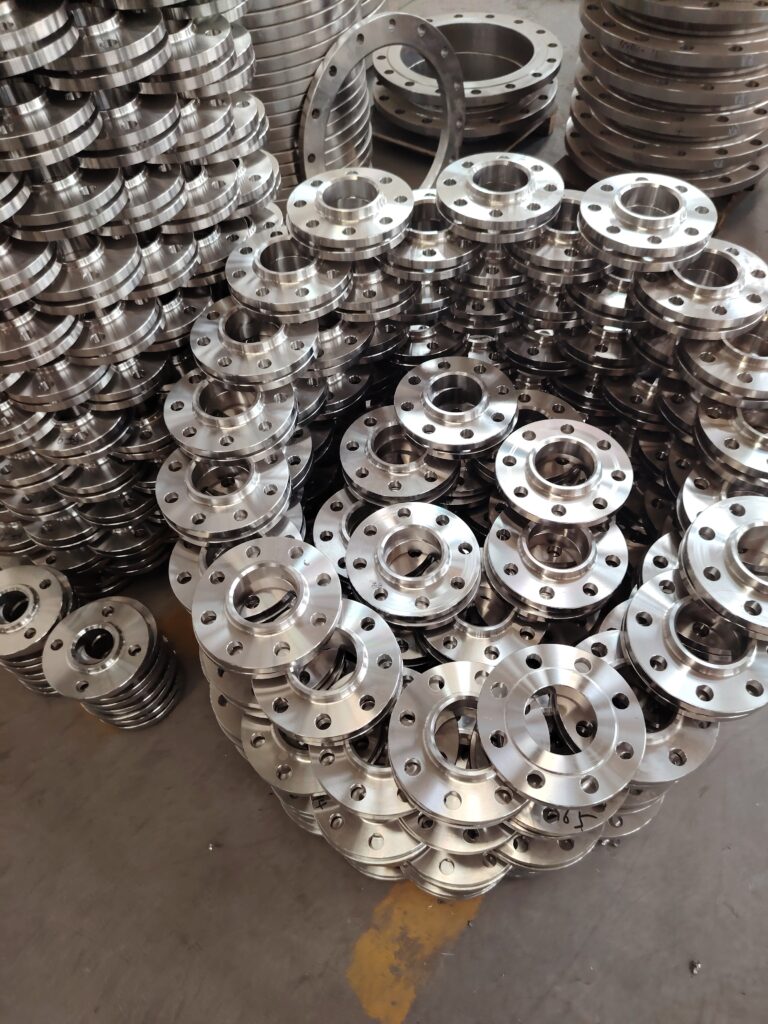
A slip on flange is designed to slide over the outside of a pipe. After positioning, it is normally welded using fillet welds. Because the pipe slips into the flange bore, alignment during fabrication can be simpler compared with a butt-welded connection.
Slip on flanges are often considered when the piping service is not highly severe and the project specification allows their use. They may be selected for general industrial piping, water systems, utility lines, and other applications where the design conditions are suitable.
Buyers should still confirm the standard, pressure rating, material, bore, facing type, and welding requirements before ordering. A slip on flange should not be selected only because it is easy to install.
What Is a Weld Neck Flange?
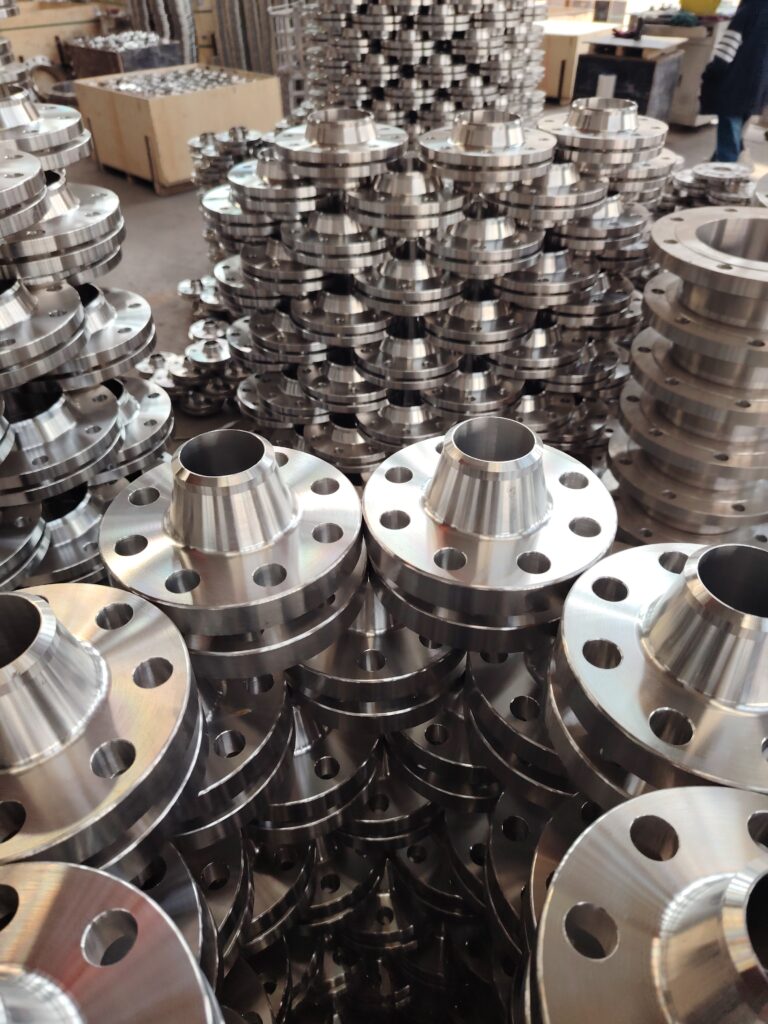
A weld neck flange has a long tapered hub and a butt-weld end. The flange is welded directly to the pipe, creating a continuous transition between the pipe and flange neck. This design helps distribute stress more smoothly from the flange to the pipe wall.
Weld neck flanges are commonly selected for more demanding services, including higher pressure, higher temperature, vibration, repeated load changes, and critical process piping. The final selection must always follow the project piping class or engineering specification.
Main Difference 1: Welding Method
The biggest difference is the welding method. A slip on flange is placed over the pipe and usually joined by fillet welding. A weld neck flange is joined by butt welding.
This affects fabrication, inspection, alignment, and long-term performance. Butt welding normally requires more preparation, but it creates a smoother transition when properly executed. Fillet welding can be easier during installation, but the project engineer must confirm whether it is suitable for the service conditions.
Main Difference 2: Strength and Stress Distribution
The long tapered hub of a weld neck flange is designed to reduce stress concentration near the flange-to-pipe connection. This makes weld neck flanges a common choice for demanding piping systems.
Slip on flanges do not have the same long tapered transition. They may be suitable for many general piping systems, but they are not normally the first choice for highly critical lines unless the project specification clearly allows them.
Main Difference 3: Installation and Fit-Up
Slip on flanges are often easier to position because the pipe fits into the flange bore before welding. This can be helpful during fabrication and alignment.
Weld neck flanges require more accurate bevel preparation, pipe alignment, and welding control. The bore should match the pipe schedule or project requirement, especially when internal flow and weld quality are important.
Main Difference 4: Cost Considerations
In many cases, slip on flanges may have a lower purchase cost and simpler installation process than weld neck flanges. However, flange cost should not be the only factor. Buyers should also consider welding cost, inspection requirements, service severity, downtime risk, and project acceptance criteria.
If the piping system is critical, selecting a lower-cost flange type without engineering approval may create higher risk later.
Main Difference 5: Standards and Specifications
Both slip on flanges and weld neck flanges may be supplied according to common standards such as ASME B16.5, EN 1092-1, DIN, JIS, or GOST, depending on the project. ASME B16.5 is commonly referenced for pipe flanges and flanged fittings from NPS 1/2 through NPS 24. ASME B16.47 is commonly referenced for larger steel flanges from NPS 26 through NPS 60.
For material, carbon steel flanges may use ASTM A105 in many forged piping applications. Stainless steel, alloy steel, duplex stainless steel, and other grades should be confirmed according to the fluid, temperature, corrosion condition, and project documentation requirements.
How B16.5 Dimensional Data Affects Flange Selection
When comparing slip on flanges and weld neck flanges, buyers should not look only at the flange name. Even for the same nominal pipe size, the pressure class can change the outside diameter, thickness, drilling pattern, hub length, and approximate weight.
For example, based on LeKe Piping’s ANSI B16.5 forged flange reference data, an NPS 2 flange shows clear differences between Class 150 and Class 300:
| Item | NPS 2 Class 150 | NPS 2 Class 300 |
|---|---|---|
| Outside Diameter | 152 mm | 165 mm |
| Flange Thickness | 19.1 mm | 22.4 mm |
| Bolt Circle Diameter | 120.7 mm | 127.0 mm |
| Number of Bolt Holes | 4 | 8 |
| Diameter of Bolt Holes | 19.1 mm | 19.1 mm |
| Approx. Weld Neck Weight, SCH40 | 2.72 kg | 3.36 kg |
| Approx. Slip On Weight | 2.21 kg | 2.90 kg |
This is why a buyer should confirm the complete specification before ordering. A request such as “2 inch flange” is not enough. The supplier still needs the pressure class, standard, flange type, bore or pipe schedule, facing type, and bolt requirements.
For quotation work, LeKe Piping can check these details against available flange reference data and customer drawings before confirming the final offer.
When Should Buyers Choose a Slip On Flange?
A slip on flange may be considered when:
- The piping specification allows slip on flanges.
- The service condition is general or less severe.
- Ease of alignment and fabrication is important.
- The pressure, temperature, vibration, and fluid medium are suitable.
- The project does not require a butt-welded flange connection.
Slip on flanges should still be checked against the applicable standard, pressure class, material, gasket, bolts, and inspection requirements.
When Should Buyers Choose a Weld Neck Flange?
A weld neck flange may be considered when:
- The line is designed for more demanding pressure or temperature service.
- Better stress distribution is required.
- The piping system is subject to vibration or repeated load changes.
- The project specification requires butt-welded flange connections.
- Pipe bore matching and weld quality are important.
Weld neck flanges are often used in oil and gas, chemical plants, power plants, water treatment, shipbuilding, and industrial equipment connections when the design calls for them.
Buyer Checklist Before Ordering
Before requesting a quotation, buyers should prepare the following information:
- Flange type: slip on flange or weld neck flange
- Size: NPS, DN, or drawing dimensions
- Material grade: such as ASTM A105, ASTM A182 F304/F316, duplex, alloy steel, or other grade
- Standard: ASME, EN, DIN, JIS, GOST, or customer drawing
- Pressure class or PN rating
- Pipe schedule or bore requirement
- Facing type: RF, FF, RTJ, or other facing
- Bolt circle, number of holes, hole diameter, and bolt length if specified by drawing
- Approximate weight requirement if freight planning or package calculation is needed
- Quantity and destination country
- Inspection and documentation requirements
LeKe Piping can review these details before quotation and help buyers match flange options with project requirements.
FAQ
Is a weld neck flange stronger than a slip on flange?
In demanding piping services, a weld neck flange is often preferred because its long tapered hub and butt-weld connection provide better stress distribution. However, the final choice should follow the project specification.
Is a slip on flange easier to install?
Yes, slip on flanges are often easier to align during fabrication because the pipe slides into the flange bore before welding. Welding and inspection requirements should still be confirmed.
Can slip on flanges be used for high pressure?
They may be available in different pressure classes, but suitability depends on the project standard, service conditions, and engineering approval. Buyers should not select flange type by pressure class alone.
Which flange is better for critical piping?
Weld neck flanges are commonly selected for critical or demanding lines, but the correct choice depends on the piping class, design temperature, pressure, fluid, and inspection requirements.
What standards are used for slip on and weld neck flanges?
Common standards may include ASME B16.5, ASME B16.47, EN 1092-1, DIN, JIS, and GOST, depending on the project location and specification.
What information should I send for a flange quotation?
Please provide flange type, size, material, standard, pressure rating, pipe schedule or bore, facing type, quantity, destination, drawings if available, and inspection requirements.
Request a Quotation
For a quotation, buyers can share the product type, size, material, standard, pressure rating or schedule, quantity, drawings or project specifications, destination country, and inspection or documentation requirements. LeKe Piping can review these details and help match suitable flange and pipe fitting options for the project.
Email: info@lkpiping.com