Key Takeaways
- NACE MR0175/ISO 15156 addresses cracking-resistant material selection for defined H₂S-containing oil and gas production and natural-gas treatment environments.
- Chemical requirements depend on the product specification, material condition and project requirements; one sulfur, phosphorus and carbon limit does not apply to all sour-service materials.
- HIC and SSC test requirements depend on the qualification route, applicable standard provisions and purchase specification. They are not automatically required for every product or heat.
- Pricing depends on grade, dimensions, manufacturing route, testing scope, documentation and quantity. Obtain a project-specific quotation.
- API 5L PSL2 grades require a separate sour-service assessment. A grade name or PSL2 designation alone does not establish ISO 15156 suitability or supply availability.
Table of Contents
- What is NACE MR0175/ISO 15156?
- NACE-Compliant Pipe vs. Standard Carbon Steel Pipe
- Applicable API 5L NACE MR0175 Grades
- How to Select NACE MR0175 Materials
- NACE Testing Methods: HIC and SSC
- Chemical Composition Limits
- Cost Comparison: NACE vs. General Piping
- Frequently Asked Questions
1. What is NACE MR0175/ISO 15156?
NACE International developed corrosion-control standards including NACE MR0175 for material selection in defined oil and gas production environments. Use the edition specified by the project.
NACE MR0175/ISO 15156 provides requirements and recommendations for material selection and qualification for carbon steel, low-alloy steel, and corrosion-resistant alloys (CRA) used in oil and gas production equipment operating in H₂S-containing environments. The standard addresses:
- Resistance to Sulfide Stress Cracking (SSC) — brittle fracture caused by H₂S and tensile stress
- Resistance to Hydrogen-Induced Cracking (HIC) — internal blistering and cracking from hydrogen permeation
- Material hardness and processing requirements for cracking resistance
- Material-specific requirements alongside the applicable product specification
For procurement, ISO 15156 should be identified by edition and applicable part. Descriptions such as “NACE piping” and “Sour Service Piping” do not replace a defined material specification, service envelope and qualification basis.
Note: NACE MR0175 materials are qualified as resistant to cracking under specified conditions — they are not immune to all forms of corrosion under all service conditions. Always verify operating parameters against the standard’s environmental limits.
2. NACE-Compliant Pipe vs. Standard Carbon Steel Pipe
The key differences between NACE MR0175-compliant pipe and standard carbon steel pipe must be assessed against the product specification and the defined service conditions. The table identifies requirements to confirm rather than universal material limits:
| Property | Standard Carbon Steel Pipe | NACE MR0175 Compliant Pipe |
|---|---|---|
| Sulfur (S) | Per product specification | Per product and project requirements |
| Phosphorus (P) | Per product specification | Per product and project requirements |
| Carbon (C) | Per grade and product specification | Per grade and qualification basis |
| Hardness | Check product requirements | Confirm method, location and applicable limit |
| HIC Test | Per product and order requirements | As required by qualification and order |
| SSC Test | Per product and order requirements | As required by qualification and order |
| Sour Service | Suitability not established by grade alone | Only within the qualified service envelope |
3. Applicable API 5L NACE MR0175 Grades
The following API 5L PSL2 grades below illustrate strength designations, not prequalified sour-service products. Confirm edition, delivery condition, manufacturing route, hardness, weld requirements and environmental limits before selection:
| API 5L Grade | Approximate ksi-to-MPa Reference | Application Examples — Design Review Required |
|---|---|---|
| API 5L B NACE | 241 | Low-pressure flowlines, gathering lines |
| API 5L X42 NACE | 290 | Moderate-pressure gas transmission |
| API 5L X46 NACE | 317 | Gas gathering systems |
| API 5L X52 NACE | 359 | Cross-country pipelines, sour gas transport |
| API 5L X56 NACE | 386 | High-pressure transmission lines |
| API 5L X60 NACE | 414 | High-pressure sour service pipelines |
| API 5L X65 NACE | 448 | Offshore risers, deepwater flowlines |
| API 5L X70 NACE | 483 | Ultra-high-pressure transmission |
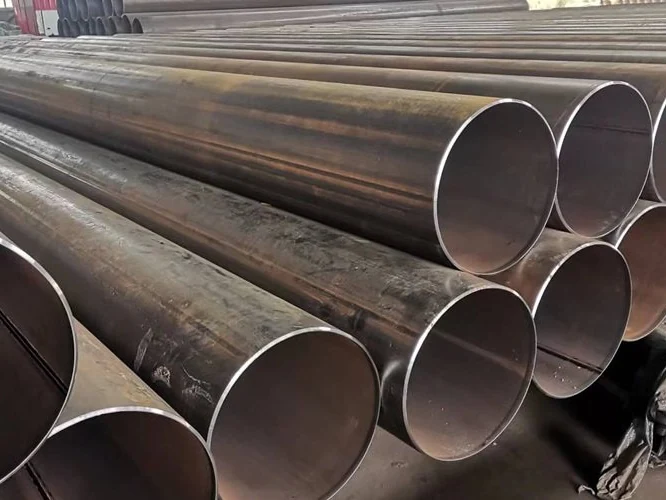
For LSAW or seamless pipe, confirm the requested grade, size and manufacturing condition with the supplier. The rounded strength conversions above are not API 5L SI acceptance values; use the specified edition and unit system. Grade alone does not establish allowable pressure.
4. How to Select NACE MR0175 Materials
Selecting qualified materials for H₂S environments requires a systematic approach. The standard applies to specifications across API, ASTM, ASME, and ANSI frameworks. Follow these steps:
- Determine the H₂S partial pressure — assess it together with the aqueous phase, pH, temperature and other relevant environmental parameters. Do not use a single threshold as a universal material acceptance rule.
- Identify the applicable material specification — API 5L for line pipe, ASTM A106 for high-temperature pipe, ASTM A333 for low-temperature service, etc.
- Verify the chemical composition — confirm the product specification, heat treatment and material-specific requirements in the applicable ISO 15156 part and project edition.
- Define any required HIC and SSC testing — specify the method, solution, stress level where applicable, duration, sampling and acceptance criteria. TM0284 and TM0177 are test-method references, not a blanket testing schedule.
- Confirm hardness limits — identify the applicable material limit, test method, load and locations for base metal, weld metal and heat-affected zones. Do not assume hardness scales or weld acceptance limits are interchangeable.
- Request material test certificates (MTC) — require traceability and evidence supporting the specified edition and qualification basis. A statement of compliance alone does not establish fitness for the actual service.
Procurement Warning: Materials qualified under NACE MR0175 are resistant to cracking under the qualified service conditions only. They may still fail if actual operating conditions (temperature, pH, chloride concentration) deviate from the standard’s environmental limits. Always involve a materials engineer in the selection process.
5. NACE Testing Methods: HIC and SSC
HIC and SSC testing address different cracking mechanisms. Whether testing is required, and whether existing qualification evidence is acceptable, depends on the applicable standard provisions and purchase specification.
5.1 Hydrogen-Induced Cracking (HIC) Test
Standard: NACE TM0284
HIC testing to TM0284 evaluates resistance to hydrogen-induced cracking using specified specimen preparation and exposure conditions. Sections are examined and reported using crack length, thickness and sensitivity ratios (CLR, CTR and CSR). Specify the applicable method edition, solution, exposure and reporting requirements.
Acceptance criteria must come from the applicable product standard and project specification. State the required limits, sampling and test frequency in the order. An MTC does not automatically waive testing required by the contract or qualification route.
5.2 Sulfide Stress Cracking (SSC) Test
Standard: NACE TM0177 (Method A — Uniaxial Tensile)
TM0177 Method A uses a tensile specimen under a specified load in a defined test environment to assess SSC resistance. Agree the method edition, specimen, applied stress, solution, exposure duration and acceptance criteria; do not assume one stress percentage or test condition applies to every qualification.
Safety Critical: SSC can compromise pressure-containing equipment exposed to wet H₂S and tensile stress. Qualification evidence must match the material condition and intended service; an unrelated corrosion test is not a substitute.
6. Chemical Composition Limits for NACE MR0175 Steels
There is no single chemistry table that qualifies all materials for sour service. Establish chemistry from the product standard, grade, manufacturing route and project requirements, together with the applicable ISO 15156 material provisions:
| Element | Sour-Service Chemistry Review | Product Specification Basis | Reason for Restriction |
|---|---|---|---|
| Sulfur (S) | Per product and project requirements | Check grade, PSL and edition | Excess sulfur forms MnS inclusions — initiation sites for HIC |
| Phosphorus (P) | Per product and project requirements | Check grade, PSL and edition | Phosphorus segregates at grain boundaries, promoting SSC |
| Carbon (C) | Per grade and qualification basis | Check grade and delivery condition | Higher carbon increases hardness and SSC susceptibility |
| Carbon Equivalent (CE) | Specify CE formula and applicable limit | Check applicable CE provisions | Controls weldability and HAZ hardness |
Assess the applicable requirements separately for carbon and low-alloy steel pipes, plates, and forged fittings. For Corrosion-Resistant Alloys (CRAs) such as duplex stainless steel or nickel-based alloys, different compositional constraints and testing protocols apply under NACE MR0175 Part 3.
7. Cost Comparison: NACE MR0175 vs. Standard Piping
Use the following cost factors to prepare a comparable enquiry. Prices, test charges, minimum quantities and lead times require supplier confirmation for the specific order:
| Cost Factor | Standard Pipe | NACE MR0175 Pipe |
|---|---|---|
| Base material | Market price | Quote by grade, size and condition |
| HIC testing scope | Check purchase specification | Quote by method, sampling and scope |
| SSC testing scope | Check purchase specification | Quote by method, sampling and scope |
| Mill certification | Standard MTC | Agreed inspection documents and qualification evidence |
| Minimum order quantity | Confirm by size and stock status | Confirm manufacturing and testing lot requirements |
| Lead time | Confirm stock and document availability | Confirm production, testing and review schedule |
Request an itemized quotation covering testing costs and minimum order quantities as well as documentation and delivery. For stock material, review traceability, material condition and qualification evidence against the actual service before accepting it.
8. Frequently Asked Questions
Q: Is NACE MR0175 the same as ISO 15156?
The designations are used together for the harmonized standard. Specify the required edition and applicable parts, and check amendments or technical circulars rather than assuming every document marked MR0175 is identical. The combined designation is ANSI/NACE MR0175/ISO 15156.
Q: Can standard API 5L pipe be used in sour service?
API 5L compliance alone does not establish sour-service suitability. Assess the actual pipe, manufacturing condition and qualification evidence against the specified ISO 15156 edition, service envelope and project requirements before acceptance.
Q: What is the difference between NACE MR0175 and NACE MR0103?
MR0175/ISO 15156 addresses material selection for defined oil and gas production and natural-gas treatment environments. MR0103/ISO 17945 addresses SSC resistance in corrosive petroleum refining environments. Select by scope and project requirements rather than treating either as universally stricter.
Q: Does NACE MR0175 apply to fittings and flanges?
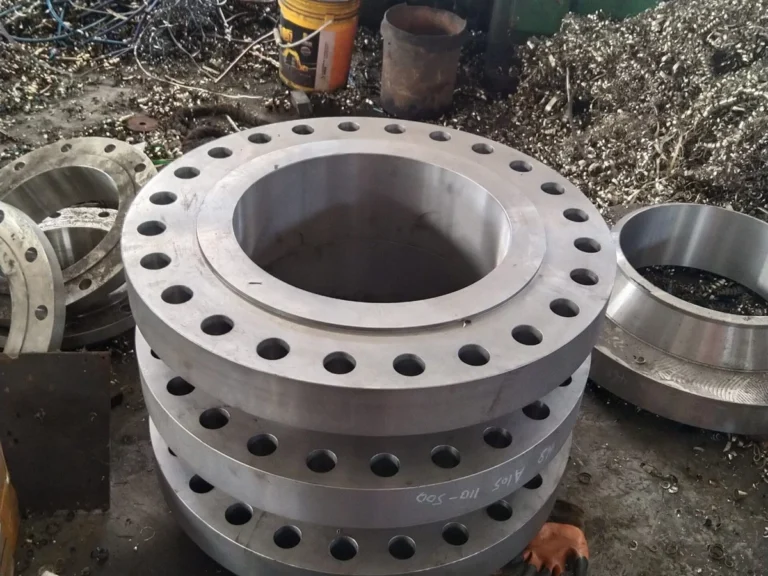
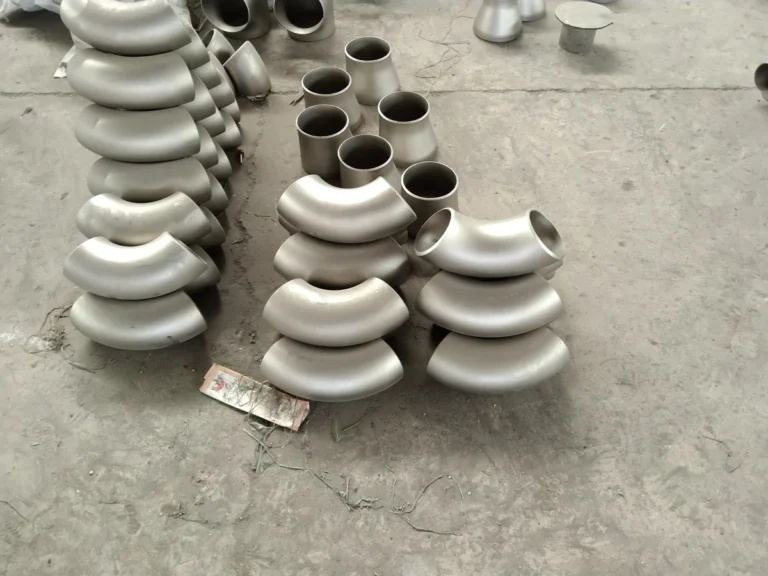
Fittings, flanges and valves within the project scope also require material suitability assessment. Requirements depend on alloy, product form, processing, welds and service conditions; identical chemistry limits or test schedules do not automatically apply to every component.
Need NACE MR0175 Steel Pipe?
Send LeKe Piping the pipe grade, PSL, delivery condition, dimensions, quantity, standard editions and service envelope, including H₂S partial pressure, pH and temperature. Include the required qualification basis, testing, inspection documents and destination. Supply availability, documentation and lead time are confirmed in the quotation. Get a Quote