In critical industries like petrochemicals, power plants, high-pressure boilers, machinery, and civil construction, the safety and integrity of piping systems are non-negotiable. ASME B16.9 butt weld pipe fittings are used in these applications when material, wall thickness, joint design and inspection meet the applicable piping code. The fitting standard alone does not guarantee a leak-free installation.
Use these five selection checks to specify pipe fittings for your international projects.
1. Medium Matching: Selecting the Right Material Grade
Select the material using the medium, concentration, design temperature and pressure, corrosion allowance and project specification. A grade name alone does not establish suitability.
- For Water, Non-Corrosive Fluids & High-Pressure Boiler Equipment: Consider ASTM A234 WPB. This carbon steel grade may suit the service where the piping specification permits it. Confirm temperature limits, allowable stress, corrosion allowance and any impact-testing requirements.
- For Corrosive Chemicals, Acids & Anti-Corrosion Systems: Select a corrosion-resistant material using service-specific data; stainless steel is not suitable for every acid or chemical.
- ASTM A403 WP304: Evaluate against the actual medium, concentration and temperature; chloride exposure may require a different grade.
- ASTM A403 WP316L: Low carbon content reduces susceptibility to sensitization associated with welding, but does not eliminate corrosion. Confirm suitability for the actual chloride level, medium and temperature before specifying this grade.
2. Operating Conditions: Determining Wall Thickness (Schedule)
Under the ASME B16.9 standard, butt weld fittings are not ordered by flange-style pressure classes. Pressure capability must be assessed using the material, dimensions, wall thickness, temperature and applicable piping-code requirements.
- Pipe-End Compatibility: The pipe fitting schedule (e.g., Sch 40, Sch 80, Sch 160, XXS) must be checked against the mating steel pipe‘s specified wall thickness and end dimensions. Confirm outside diameter, bore, bevel and permitted mismatch; different wall thicknesses require a transition detail accepted by the applicable code and project design.
- Temperature De-rating: Use material allowable stresses at the design temperature and the applicable code, such as ASME B31.3 for process piping or ASME B31.1 for power piping. Include corrosion allowance and manufacturing tolerances in the wall-thickness assessment.
3. Connection Method: Why Choose Butt Welding?
While socket weld fittings exist for small pipelines, ASME B16.9 specifically regulates factory-made wrought steel butt welding fittings.
- Weld Preparation: Check bevel geometry, alignment and root gap against the approved welding procedure. Joint performance depends on the design, materials, welder qualification and completed weld quality.
- Inspection Ready: Specify the examination method, extent and acceptance criteria under the applicable code and inspection plan. RT or UT may be required, but 100% examination is not automatic for every butt weld or fitting.
4. Geometry and Types: Seamless System Integration
Fittings must precisely match the nominal pipe size (NPS) and configuration of the pipeline layout:
A. Butt Weld Elbows (45° / 90° / 180°)
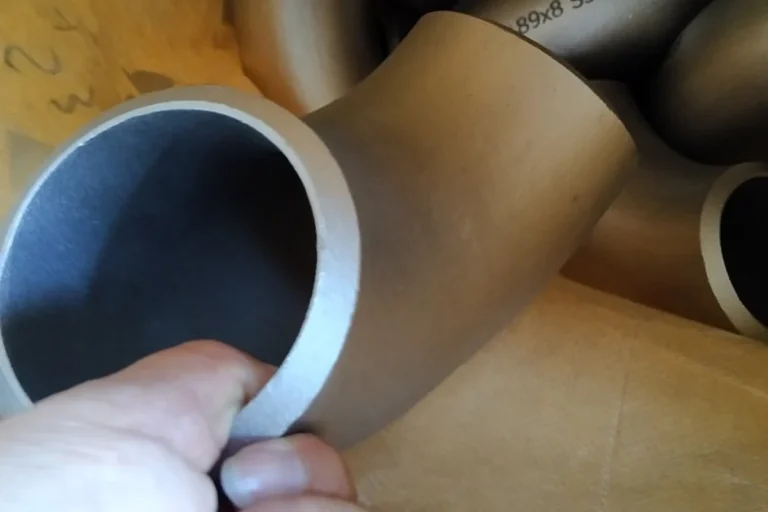
- Long Radius (LR, 1.5D): The curvature radius is 1.5 times the pipe diameter. It offers minimal flow resistance and is the most demanded item in export orders.
- Short Radius (SR, 1.0D): Reserved for tight spaces inside machinery or compact power plant manifolds.
B. Concentric vs. Eccentric Reducers
Use eccentric reducers in horizontal pipelines to prevent gas pockets or liquid accumulation, and concentric reducers in vertical piping (ideal for insulation piping systems).
C. Equal & Reducing Tees
Used for splitting or merging flows based on branch pipe diameters in petrochemical and power distribution systems.
5. Compliance & Certification: The Exporter’s Baseline
For international procurement and global bidding, compliance is the ultimate gatekeeper.
- ASME B16.9 Standard: State the applicable edition and confirm fitting dimensions, tolerances, markings and required verification. List the material specification and supplementary project requirements separately in the purchase order.
- Material Traceability (EN 10204 3.1): Specify EN 10204 Type 3.1 documentation when required and confirm availability before ordering. Check that the certificate identifies the ordered material, relevant test results and heat or lot references that match the delivered fittings.
🛠️ Frequently Asked Questions (FAQ) for Global Buyers
Q1: Can an ASME B16.9 fitting weld to an EN or DIN standard pipe?
While some sizes overlap, the outer diameters (OD) and tolerances between ASME (inch-based) and DIN/EN (metric-based) standards can differ. Always verify the OD and wall thickness in millimeters before ordering to ensure seamless welding alignment.
Q2: What is the standard surface treatment for A234 WPB carbon steel fittings?
To prevent rust during ocean freight and long-term storage, carbon steel fittings are typically treated with black painting, anti-rust oil, or hot-dip galvanization depending on your project’s specific climate and environmental requirements.
📞 Contact Your Reliable ASME B16.9 Fittings Manufacturer
Send the fitting type, size, wall thickness, design conditions and required standard edition when requesting ASTM A234 WPB or ASTM A403 WP304 / WP316L butt weld fittings from LeKe Piping. Include quantity, inspection scope and certificate requirements so supply and documentation can be confirmed in the quotation.