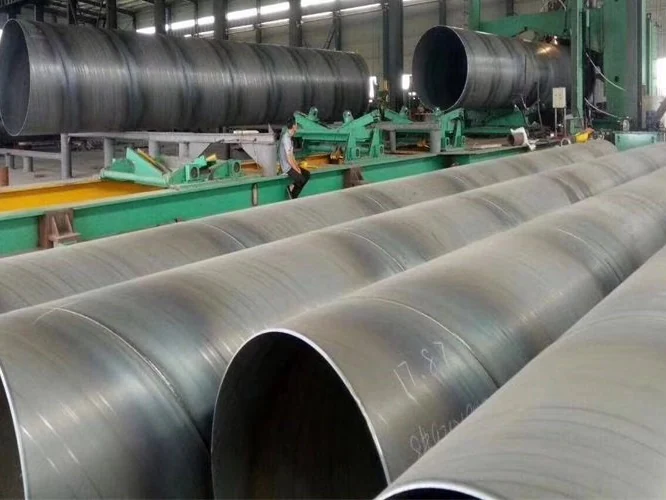
When sourcing line pipes for oil, gas, and water transmission systems, adherence to international standards is paramount to ensure structural safety under high-pressure environments. The American Petroleum Institute (API) standard API 5L is universally recognized as the gold standard for seamless and welded steel line pipes.
However, engineering blueprints and older procurement specifications frequently refer to API 5LX. What is the difference between API 5L and API 5LX? Are they competing standards, or does one supersede the other?
The engineering team at LeKe Piping breaks down the historical evolution, designation logic, and metallurgical differences between these two terms.
1. The Core Difference: General Classification vs. High-Test Line Pipe
To put it simply, API 5L is the comprehensive master standard, while API 5LX was a separate historical specification for high-test line pipe, later consolidated with API 5L. It was not simply a grade suffix within the original API 5L document.
[API 5L Master Standard]
   ├── Regular Grades: Grade A, Grade B (Lower Yield Strength)
   └── "X" Grades (Formerly API 5LX): X42, X52, X60, X65, X70 (High-Test / High Yield Strength)
- API 5L: Modern API 5L covers both conventional and high-strength grades. Examples include Grade A and Grade B, as well as X-grades. Confirm mechanical requirements against the specified edition, PSL, grade and pipe dimensions.
- API 5LX: The historical specification covered “High-Test”. This designation was introduced to specify line pipes engineered with significantly higher yield strengths (starting from 42,000 psi and above) to accommodate modern high-pressure transmission networks.
2. Historical Evolution: Why “API 5LX” is Technically Obsolete
For interpreting historical specifications, note that API 5LX is a historical specification, not a current alternative to API 5L.
In the mid-20th century, API maintained separate publications for different pipe technologies (e.g., API 5L for regular line pipe, API 5LX for high-test line pipe, and API 5LS for spiral-welded pipe).
However, to streamline global procurement and reduce ambiguity, API consolidated the separate API 5L, 5LS and 5LX specifications into API 5L in 1983.
Current Status in Modern Specifications:
When preparing a new order to API 5L (project-specified edition), confirm the required grade and product specification level. Higher-strength grades use “X Grades” such as X52; X is a prefix to the strength number, not a suffix. An example of terminology is:
- Older Designation: API 5LX Grade X52
- Modern Designation: API 5L Grade X52 (or L360 under ISO 3183 harmonized terms).
3. Metallurgical & Mechanical Property Comparison
The table compares selected Grade B and X60 reference values; it is not a complete acceptance specification. Verify values, chemistry limits and any exceptions against the order edition, PSL, manufacturing route and wall thickness. Grade alone does not determine allowable pipeline pressure or suitability for offshore or sour service.
| Property / Parameter | Standard API 5L (e.g., Grade B) | High-Test API 5L / Historical 5LX (e.g., X60) |
|---|---|---|
| Minimum Yield Strength | 245 MPa (35,500 psi) | 415 MPa (60,000 psi) |
| Minimum Tensile Strength | 415 MPa (60,000 psi) | 520 MPa (75,400 psi) |
| Carbon Content (Max % for Seamless PSL1) | Approx. 0.28% | Approx. 0.26% (Lower carbon, higher micro-alloys) |
| Micro-Alloy Elements | Minimal | Micro-alloyed with Nb (Niobium), V (Vanadium), and Ti (Titanium) for grain refinement. |
| Primary Application | Low-pressure gathering lines, utility piping, water lines. | High-pressure cross-country oil and gas pipelines, offshore transmission. |
Yield Strength Designation Logic:
In the “X” designation, the number following the X represents the minimum yield strength in kilopounds per square inch (ksi).
- X42: 42,000 psi min yield strength.
- X52: 52,000 psi min yield strength.
- X65: 65,000 psi min yield strength.
4. Technical FAQ for Piping Engineers & Procurement
Q1: If a client asks for API 5LX Pipe, what should I quote?
A: First agree the required API 5L edition and purchase specification with the purchaser. For a legacy request such as API 5LX-52, a proposed modern grade may be API 5L Grade X52. Confirm PSL, delivery condition, dimensions, service requirements and inspection documents, and obtain acceptance of any substitution before supply. A matching grade name alone does not demonstrate full equivalence.
Q2: What is the difference between PSL1 and PSL2 in modern API 5L X-Grades?
A: Modern API 5L splits pipes into two Product Specification Levels (PSL):
- PSL1: A product specification level with its own manufacturing, chemistry, mechanical-property and testing requirements. Check the order edition and supplementary requirements rather than assuming that a test is unnecessary.
- PSL2: Includes additional requirements compared with PSL1, with applicability depending on grade, dimensions, manufacturing route and service annexes. Review chemistry, toughness, hydrostatic testing and NDT requirements in the specified edition. PSL2 alone does not establish sour-service or offshore suitability; specify the relevant additional requirements.
Q3: Does LeKe Piping provide material traceability for API 5L X-Grades?
A: Specify heat-number traceability and the required inspection document at quotation, such as an EN 10204 3.1 Mill Test Certificate (MTC) where required by the order. Confirm document availability, issuer, required test results and marking-to-certificate traceability before purchase.
Conclusion: Streamlining Your Pipeline Procurement
Understanding the transition from historical terms like API 5LX to modern API 5L standards prevents engineering miscommunications and ensures project compliance. When dealing with high-yield, high-test cross-country pipelines, specifying the exact API 5L X-Grade along with the desired PSL level is the correct industry practice.
For a quotation, send the edition, grade, PSL, delivery condition, pipe dimensions, quantity, destination and inspection requirements to LeKe Piping for review. Specify matching butt-weld fittings under their own applicable material and dimensional standards; API 5L is a line-pipe specification and does not by itself specify butt-weld fittings.