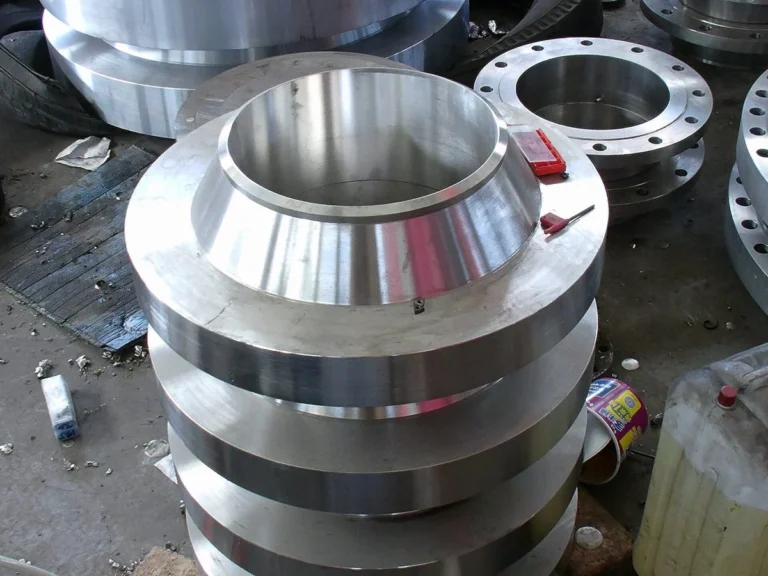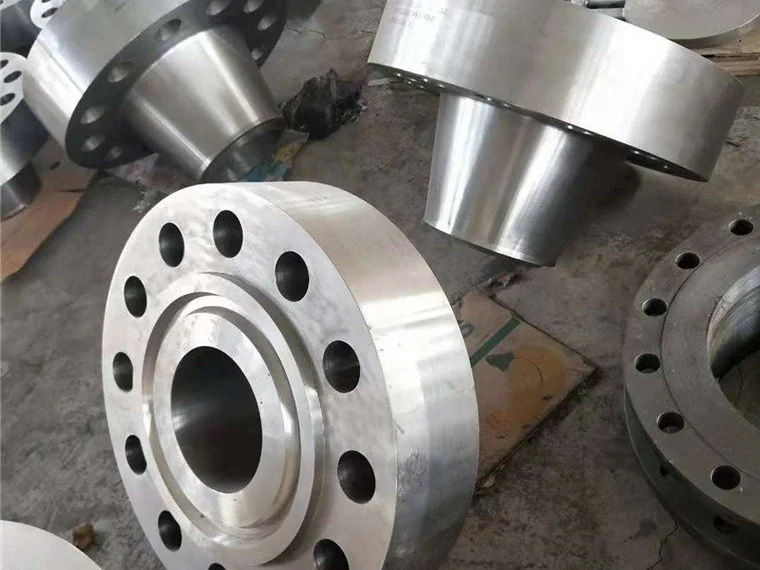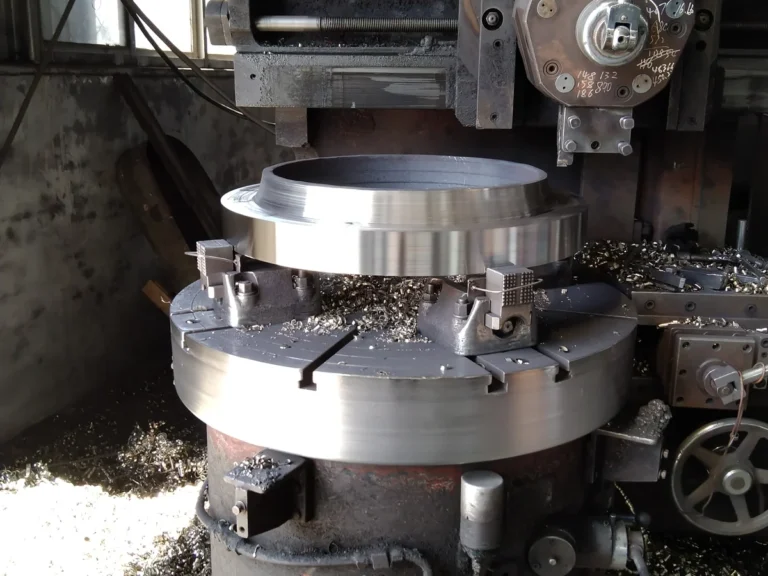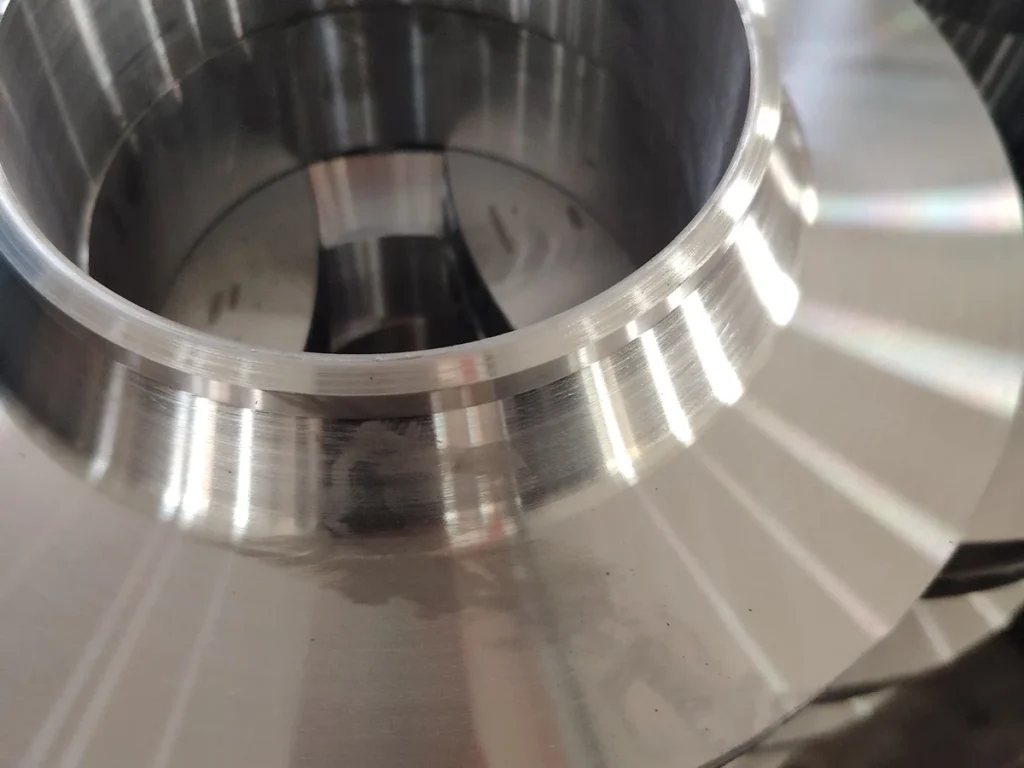
For corrosive piping service, flange selection begins with the process conditions, material requirements and connection details. This guide focuses on the Class 150 DN100 Stainless Steel Weld Neck (WN) Flange.
Dimensional fit alone does not establish suitability for corrosive service or a particular operating life. Review the medium, concentration, temperature, design pressure, corrosion risks and maintenance requirements before approving the flange material and joint design.
This purchasing guide from LeKe Piping outlines specification and documentation questions for Class 150 DN100 stainless steel weld neck flanges.
1. Key Specifications & Dimensions: Confirming the Applicable Requirements
A DN100 (4-inch) flange designated as Class 150 requires dimensional and pressure-temperature checks for the specified material and standard edition. The table below is a reference overview, not a fabrication or acceptance drawing. Verify each value, unit system and feature definition against the approved drawing and applicable edition of ASME B16.5. The approximate pressure shown below is not a universal allowable pressure for stainless steel; confirm the rating for the selected material group and design temperature.
| Engineering Parameter | Technical Specification (ASME B16.5) |
|---|---|
| Nominal Pipe Size (NPS) | 4 Inch / DN100 |
| Pressure Rating | Class 150 (Approx. 20 bar at ambient temperature) |
| Flange Outside Diameter (OD) | 230 mm (9.00 inches) |
| Bolt Circle Diameter (PCD) | 190.5 mm (7.50 inches) |
| Number of Bolt Holes | 8 |
| Diameter of Bolt Holes | 19 mm (0.75 inches) |
| Flange Thickness (Min) | 23.9 mm (0.94 inches) |
| Hub Height | 76.2 mm (3.00 inches) |
Why the Face Finish Matters for Leak Prevention
For Class 150 stainless steel flanges, the Raised Face (RF) facing and its finish should be confirmed against the order, gasket requirements and applicable standard. Specify the required surface texture, roughness value and units.
- Procurement check: Confirm the facing type, finish acceptance criteria and inspection method before manufacture. Surface finish alone cannot guarantee leak-tightness; gasket selection, bolting, assembly and operating conditions also require review. Do not assume a single roughness target applies to every order.
2. Material Selection: 304L vs. 316L for Corrosive Environments
Stainless steel isn’t just one material. For industrial piping, the choice between ASTM A182 F304L and F316L forged stainless steel should be based on the actual medium and service conditions, not the grade name alone.
[Confirm material] ──> [Review forming route] ──> [Verify required heat treatment] ──> [Check finished dimensions]- ASTM A182 F304L (Low Carbon): Assess compatibility with the actual process medium, cleaning chemicals, concentration and temperature. An application label such as food processing or water treatment is not sufficient to approve the grade.
- ASTM A182 F316L: Consider this grade in the corrosion assessment, but do not assume it is suitable for every chloride-containing, marine or acidic environment. Provide chloride concentration, temperature and exposure conditions for material selection.
- The “L” Designation (Low Carbon): Lower carbon content helps reduce susceptibility to sensitization associated with carbide precipitation. It does not guarantee immunity to corrosion; welding conditions and subsequent service exposure still matter.
3. Heat Treatment: Confirming Requirements and Records
Review heat-treatment requirements against the specified material grade, applicable specification and purchase order. A generic temperature range or manufacturing description is not evidence that a particular batch received the required treatment.
Heat-treatment documentation checklist:
For the selected grade, confirm the applicable requirements for Solution Annealing Treatment.
- Verify the specified treatment temperature and holding requirements against the governing material specification and approved procedure.
- Confirm the required cooling method and the records needed to demonstrate compliance for the supplied batch.
Agree the inspection-document type and supporting records before ordering. If the order requires an EN 10204 3.1 Mill Test Certificate (MTC), confirm its scope and traceability. Request heat-treatment charts separately where required; do not assume they are automatically included with every certificate.
4. Technical FAQ for Procurement & Piping Engineers
Q1: Can a Class 150 DN100 WN Flange be welded to a Schedule 40S pipe directly?
A: Confirm the connecting pipe outside diameter and wall thickness, flange bore, weld-end preparation and permitted alignment tolerances against the approved drawing and applicable piping requirements. State the pipe schedule or actual dimensions in the enquiry; do not assume that nominal size alone establishes a suitable weld-end match.
Q2: What material-verification documents and tests should be specified?
A: Specify certificate review and heat-number traceability, together with any required Positive Material Identification (PMI) testing. Agree the test method, sampling extent, acceptance criteria and report requirements before ordering. Confirm that the selected method can verify the elements required by the specification; a grade-identification result alone does not establish full material compliance.
Q3: What packaging requirements should be agreed for ocean freight?
A: Specify protection for the sealing face and weld end, separation to prevent contact damage, and moisture protection suited to the shipping and storage conditions. Confirm the packing method, case requirements and any destination-specific treatment or marking requirements in the order.
Conclusion: Prepare a Complete Flange Enquiry
Include the medium, design pressure and temperature, flange standard and edition, material grade, facing, connecting pipe dimensions and quantity. Agree material traceability and required inspection documents, dimensional acceptance criteria and any additional testing before order confirmation.
Send your specification and approved drawing to LeKe Piping so the scope, documentation and delivery requirements can be reviewed together.