Reading a fitting dimension table starts with the fitting shape, nominal pipe size and the correct dimension symbols. This guide explains the main dimensions for ASME B16.9 elbows, tees, reducers and caps, with LeKe Piping drawings and selected metric examples.
What does ASME B16.9 cover?
ASME B16.9 covers overall dimensions, tolerances, ratings, testing and marking for factory-made wrought buttwelding fittings in sizes NPS ½ through NPS 48 (DN 15 through DN 1200). The official edition referenced by this guide is ASME B16.9-2024.
Use the dimensional standard together with the specified material grade, pipe wall thickness and project piping requirements. The nominal size or shape alone does not establish service suitability.
Elbow dimensions: 45°, 90° and 180°
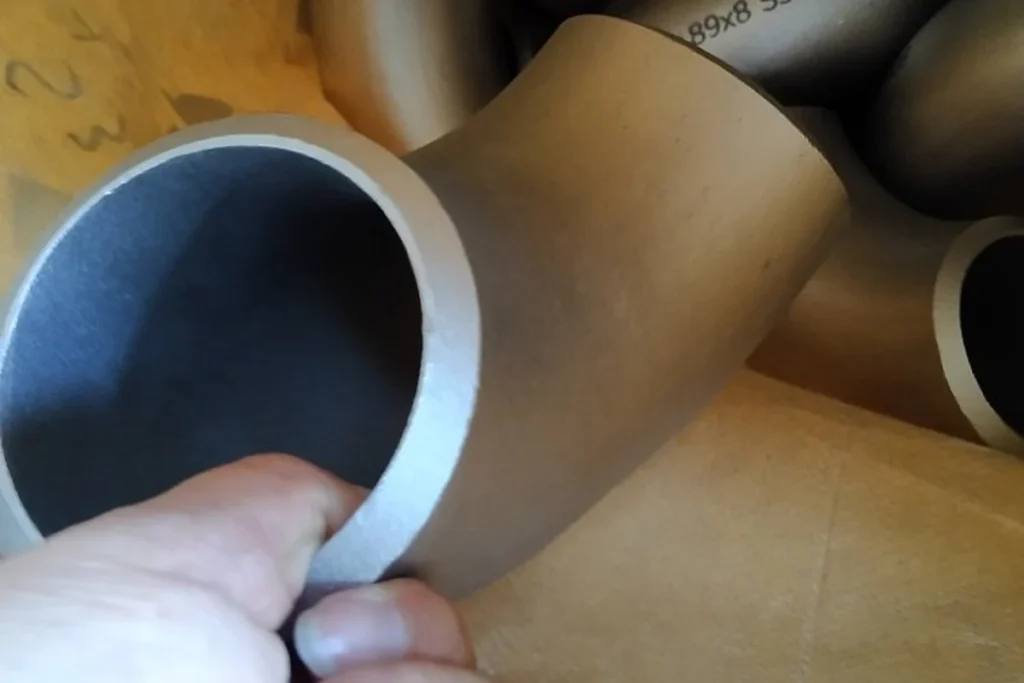
For an elbow, identify the angle and radius before reading the center-to-end dimensions. A long-radius (LR) 90° elbow and a short-radius (SR) 90° elbow of the same NPS have different geometry.
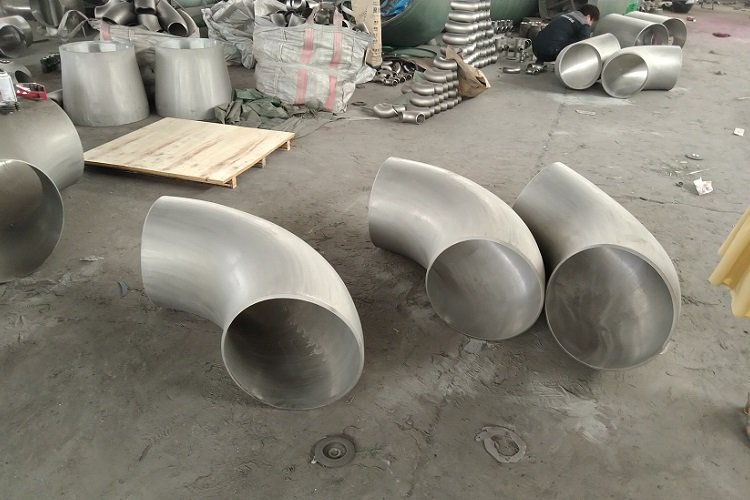
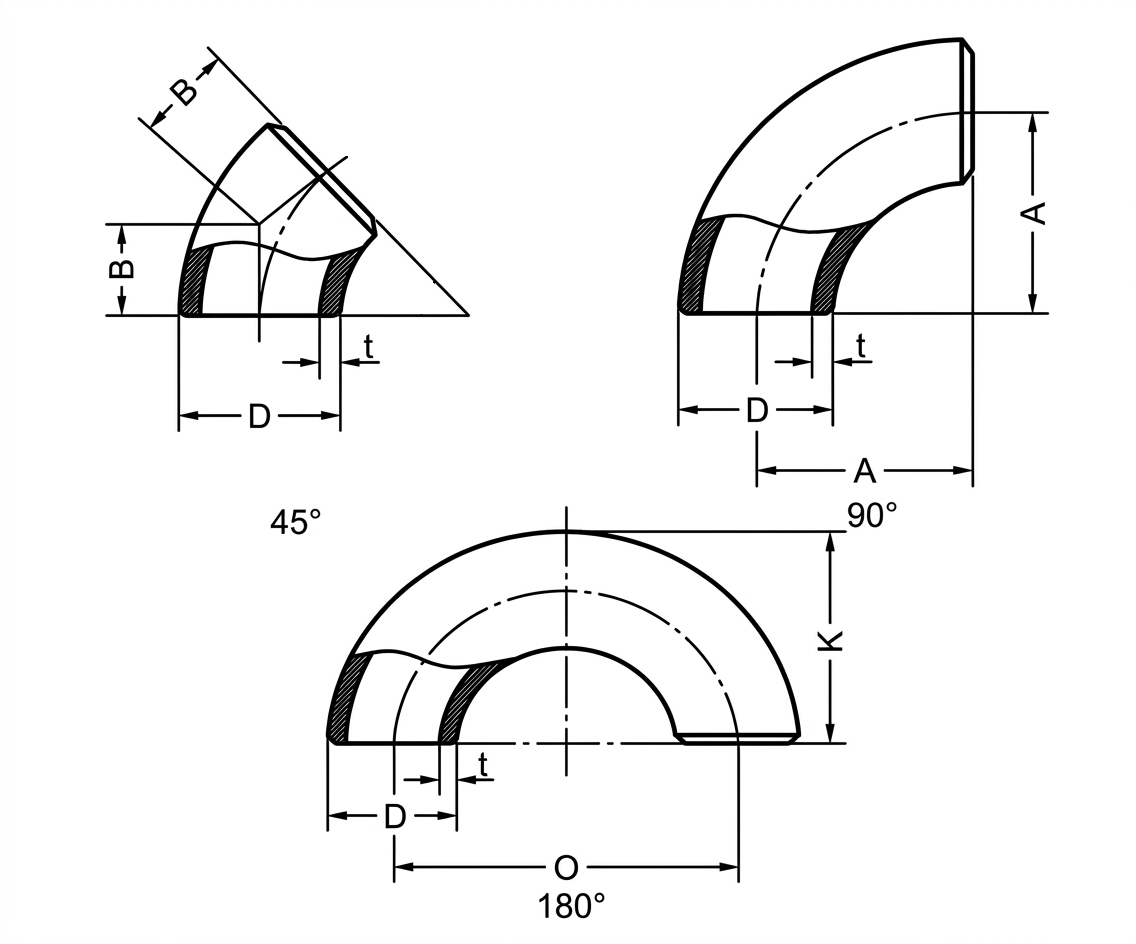
In the supplied drawing, D identifies end outside diameter and t wall thickness. A is the 90° center-to-end dimension, and B is the 45° center-to-end dimension. The 180° return view uses K and O; select the corresponding return table when checking those dimensions.
| NPS | End OD D (mm) | 90° LR A (mm) | 45° LR B (mm) |
|---|---|---|---|
| 2 | 60.3 | 76 | 35 |
| 4 | 114.3 | 152 | 64 |
| 6 | 168.3 | 229 | 95 |
| 8 | 219.1 | 305 | 127 |
The sample values apply to the listed long-radius elbows. They do not describe every elbow or formed bend. View the LeKe Piping elbow and bend range when preparing a product inquiry.
Equal and reducing tee dimensions
An equal tee has run and branch ends of the same nominal size. A reducing tee has a smaller branch. State both run and branch sizes when requesting a reducing tee.

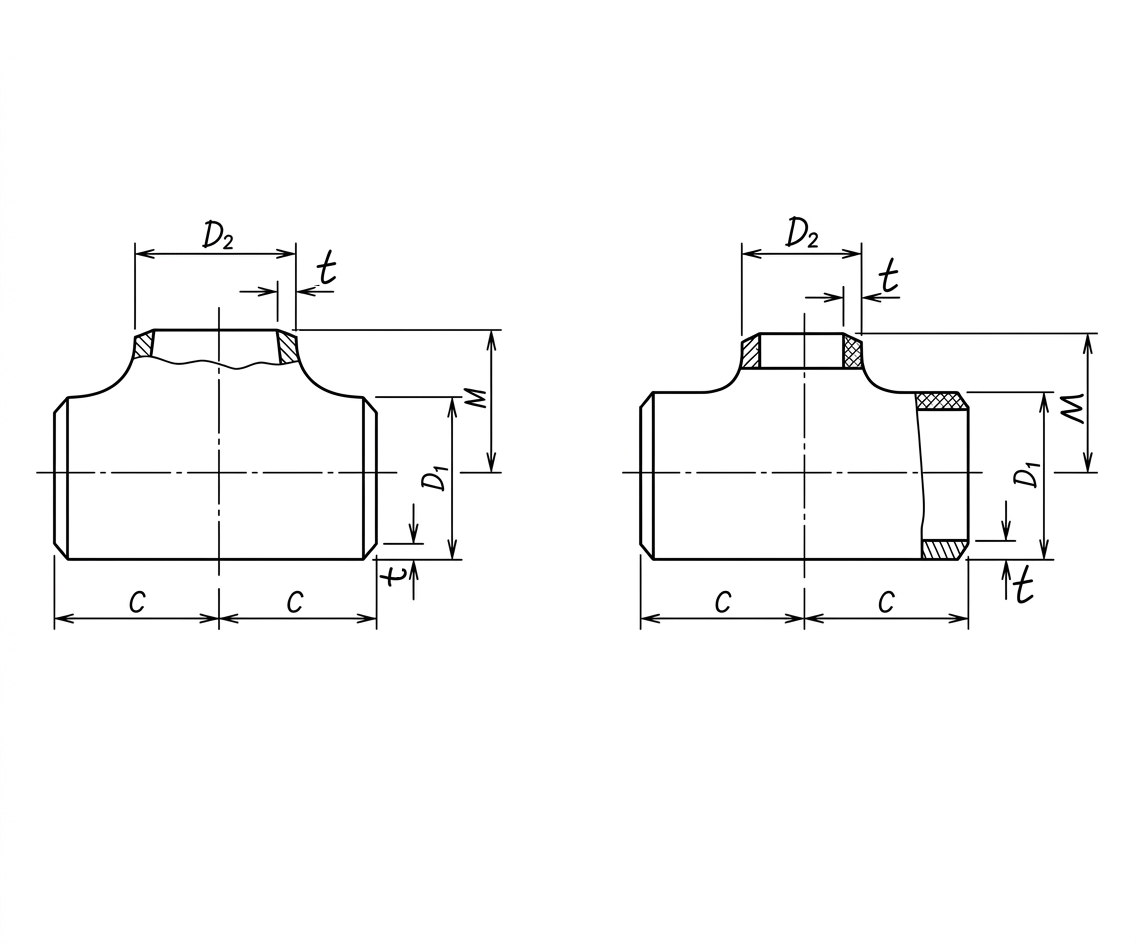
The supplied drawing labels the run outside diameter D₁, branch outside diameter D₂ and wall thickness t. C is the run center-to-end dimension; M is the branch center-to-end dimension. For the equal-tee examples below, C and M are equal.
| Run × branch NPS | End OD (mm) | Run C (mm) | Branch M (mm) |
|---|---|---|---|
| 2 × 2 | 60.3 | 64 | 64 |
| 4 × 4 | 114.3 | 105 | 105 |
| 6 × 6 | 168.3 | 143 | 143 |
| 8 × 8 | 219.1 | 178 | 178 |
Reducing-tee dimensions must be checked for the exact run and branch combination. See the LeKe Piping tee product page.
Concentric and eccentric reducer dimensions
A concentric reducer keeps the two end centerlines aligned. An eccentric reducer offsets them. Specify the required type and both end sizes; the size designation alone does not define eccentric orientation.

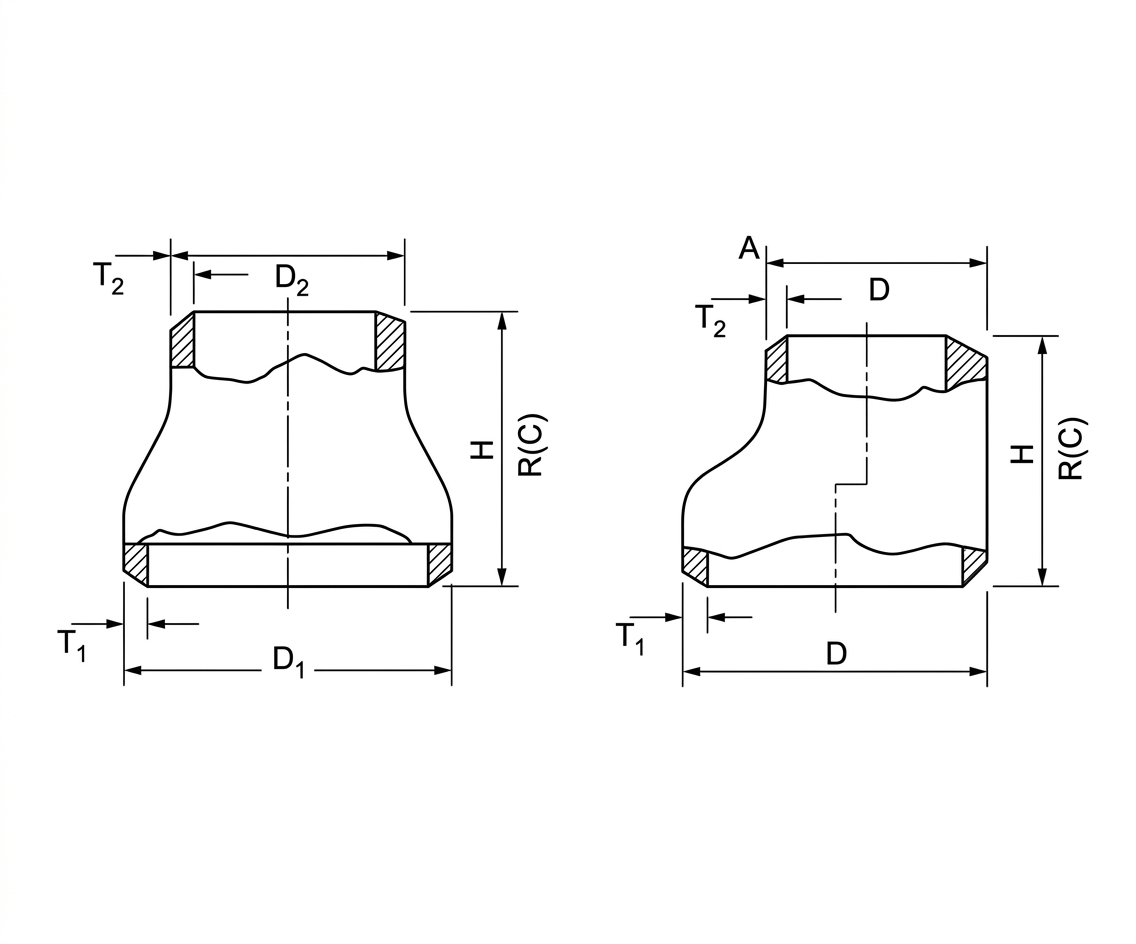
In the concentric view, D₁ and D₂ distinguish the large and small end diameters, while T₁ and T₂ identify their wall thicknesses. H is the end-to-end length. The eccentric view also contains D, A and R(C) notations; confirm their meaning against the selected drawing rather than assigning a value from another table.
| Large × small NPS | Large × small OD (mm) | Length H (mm) |
|---|---|---|
| 2 × 1 | 60.3 × 33.4 | 76 |
| 4 × 2 | 114.3 × 60.3 | 102 |
| 6 × 4 | 168.3 × 114.3 | 140 |
| 8 × 6 | 219.1 × 168.3 | 152 |
Confirm wall requirements at both ends and the drawing for the chosen reducer type. View the LeKe Piping reducer range.
Buttweld cap dimensions
A buttweld cap closes a pipe end. The supplied drawing marks outside diameter D, wall thickness T and overall height E (E₁).

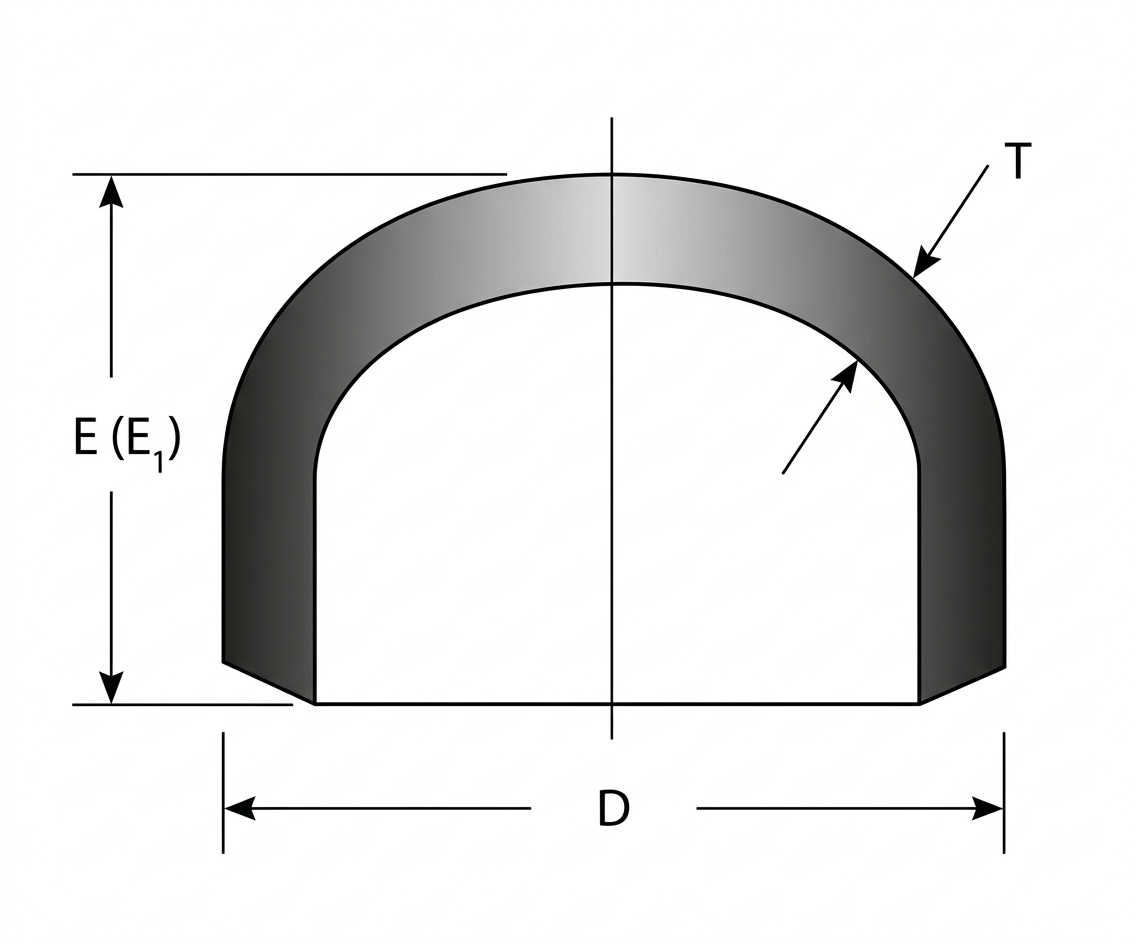
The cited sample table uses H / H₁ notation for cap height, while the supplied drawing uses E (E₁). Confirm the applicable notation and wall-thickness case in the governing table and approved drawing.
| NPS | End OD D (mm) | Height H (mm) |
|---|---|---|
| 2 | 60.3 | 38 |
| 4 | 114.3 | 64 |
| 6 | 168.3 | 89 |
| 8 | 219.1 | 102 |
These heights apply to the stated reference cases. Heavy-wall caps may require different heights. See the LeKe Piping cap product page and confirm the wall and dimensional requirements in the inquiry.
What to include in an ASME B16.9 fitting inquiry
- Fitting type: elbow angle and radius, equal or reducing tee, concentric or eccentric reducer, or cap.
- Nominal sizes: state every end size, including run and branch sizes or large and small reducer ends.
- Wall thickness: provide schedule or actual wall thickness and any end-preparation requirement.
- Material: include the material specification and grade required by the project.
- Standard and edition: identify the governing ASME B16.9 edition and any project supplements.
- Commercial and inspection details: quantity, destination, testing, certification, marking and delivery requirements.
For induction bends, review the separate scope of ASME B16.49 and the project specification.
Frequently asked questions
Is the outside diameter of NPS 4 pipe 4 inches?
No. NPS is a nominal size. NPS 4 pipe has a specified outside diameter of 4.500 in (114.3 mm).
Does changing pipe schedule change every fitting dimension?
Schedule identifies wall thickness. Many envelope dimensions are associated with nominal size and fitting type, but wall-dependent cases and end-preparation requirements must be checked. Heavy-wall cap height is one example.
Can these sample tables be used for inspection acceptance?
Use the governing standard, purchase specification and approved drawing for inspection. These selected tables omit tolerances, wall requirements and many sizes.
Request a fitting drawing or quotation
Send the fitting type, end sizes, wall thickness, material grade, quantity and applicable standard to info@lkpiping.com. Include the project drawing when available so the required geometry can be reviewed.
References and further reading
- ASME B16.9-2024 official standard information.
- LeKe Piping technical resources: check the edition of each data sheet before use.
- Selected metric sample values: public reference tables for elbows, tees, reducers and caps.